Why the Seaside Picture House Feels Different Before the Film Starts
Why the seaside picture house feels different before the film starts: make the arrival, shared room and local setting part of the evening, not an afterthought.
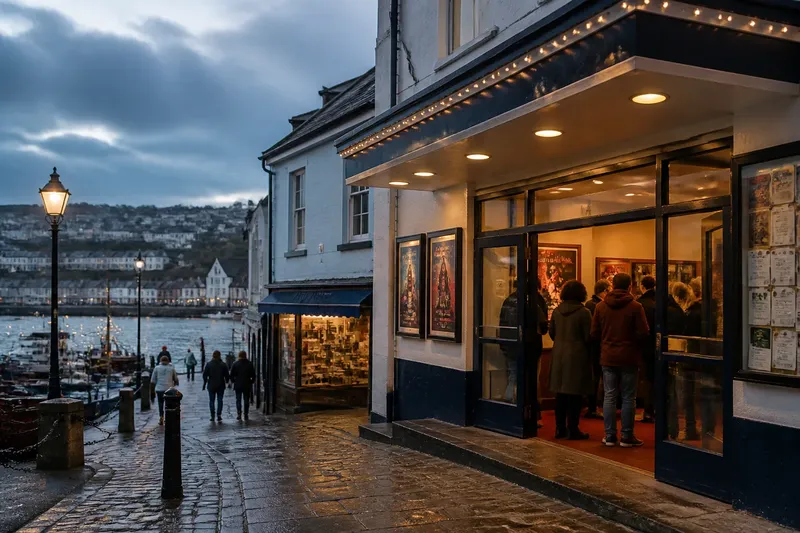
The common mistake at a seaside picture house is to arrive at the last possible moment, find a seat and treat everything before the film as wasted time. The cost is a missed part of the outing: the walk from the harbour or high street, the room gathering itself, and the small local details that make this cinema feel unlike a screen anywhere else. A seaside picture house feels different before the film starts because the anticipation begins outside the auditorium.
Why does arriving just before the trailers feel unsatisfying?
Late arrival turns a sequence into a single task: get inside, locate the row, avoid blocking someone’s view. That may be necessary on a tight evening, but it leaves little room to notice the route or settle into the place. The cinema becomes a container for the film, rather than one stop in a coastal outing.
Try choosing a modest arrival margin that suits the venue and the rest of your plans. Walk the last stretch rather than arranging every part of the journey to end at the door. Notice what is actually on the way: a lane opening towards the water, a working quay, a bus stop full of evening traffic, or the change from shopfronts to the cinema’s old facade. There is no need to turn this into a scenic pilgrimage. A local street is allowed to be a local street.
If you have already arrived late, do not attempt to recover the missed atmosphere by rushing around the building. Get seated quietly and let the transition happen there. The useful adjustment is for next time, not a hurried lap of the foyer while the lights dim.
What if the setting feels like decoration?
A coastal address does not automatically make a cinema experience feel rooted in its town. The setting can seem like decoration when the visit is planned as a door-to-screen transfer, with no attention to how the venue connects to its surroundings. The answer is not to seek a perfect view or to treat the town as a backdrop. It is to notice the ordinary relationship between cinema and place.
Look for details you can verify without making assumptions: a noticeboard listing local events, a foyer window facing a recognisable street, a programme that includes regional work, or a building used by residents for more than screenings. These signs need not be grand. A cinema’s sense of place often comes through in how people use it, rather than in a nautical motif on the carpet.
Say you have an evening screening in a small harbour town and arrive with time to spare. You take the lane from the bus stop, see the fishmongers closing and read a handwritten notice for a community event in the cinema foyer. The film has not begun, but the outing now belongs to that town rather than to an interchangeable auditorium. That is an invented situation, not a claim about any particular venue; the point is to notice what is present, not to manufacture atmosphere.
How can an unfamiliar room feel less awkward?
Shared anticipation can be pleasant, but an unfamiliar foyer may also feel like a room where everyone else knows the routine. People appear to know where to queue, whether seats are allocated and how long they can linger. The uncertainty makes it tempting to retreat to a phone until the doors open.
Start with the practical cues. Check the ticket for a screen or seat, look for signs at the entrance, and ask staff a direct question if the arrangement is unclear. Then choose a place to wait that does not obstruct the counter or doorway. You do not need to perform sociability. A nod to the person holding the door is enough participation for anyone who prefers a quiet evening.
Once inside, let the room’s pace be what it is. A lively foyer may have people catching up; a nearly silent one may simply have a subdued audience. Neither is a test of whether you belong. If you are meeting someone, agree on a clear landmark such as the ticket desk rather than trying to locate each other by scanning every face.
What should you do when the pre-film atmosphere disappoints?
Sometimes the foyer is bright, the seats are filling and nothing in particular seems to happen. Waiting for a cinematic moment to announce itself is a reliable way to become impatient. The anticipation of a seaside picture house is usually made of small changes: the queue moving, a door opening, conversation thinning, the room’s attention turning towards the screen.
Give yourself something specific to notice instead of demanding a mood. Read the programme notes, look at the building’s details, or listen for the shift from foyer noise to auditorium quiet. If the venue has a café, bar or display, use it only if it genuinely adds to your evening. A purchase is not an entrance fee to the atmosphere.
What is not worth the effort is staging a perfect pre-film ritual: hunting for a particular seat in the foyer, forcing conversation with strangers, or trying to make every coastal outing feel memorable. Those tasks add pressure to an experience that works best when it can remain ordinary.
Which small questions help before the lights go down?
How early should I arrive at a seaside picture house?
Allow enough time to reach the entrance calmly and follow the venue’s seating arrangements. If the journey itself is part of your evening, leave a little room for it rather than arriving at the last moment.
Should I explore the town before the screening?
Only if it suits your plans and the route is convenient. A familiar street or the walk from a nearby stop can connect the cinema to its setting without turning the evening into a sightseeing schedule.
What if I do not want to talk to other cinema-goers?
You can still take in the shared room without joining conversations. Notice the changing noise, the queues and the moment people settle; quiet attention counts as being present.
Do local details matter if the film is not about the coast?
They can matter because the venue and its audience belong to the town, even when the story on screen does not. The contrast can be part of the evening, without requiring the film to explain its location.
How can you make the wait part of the evening?
Keep the plan simple: arrive without sprinting, notice one real detail of the route or room, and let the audience’s gradual gathering happen around you. If something is unclear, ask staff rather than guessing; local arrangements vary, and the venue’s own instructions take precedence.
The seaside picture house feels different before the film starts when you allow the arrival to register. It need not be picturesque or sociable. A quiet walk from the bus stop, the sound of the foyer settling, or the familiar face behind the ticket desk can be enough. By the time the screen lights, the evening has already begun—and the useful thing is that none of it needs to be arranged like a production.