Open-Air Screening or Indoor Cinema: Choosing the Evening
Open-air screening or indoor cinema? Compare sound, comfort, weather and practical plans to choose a film night that suits the coast and your party.
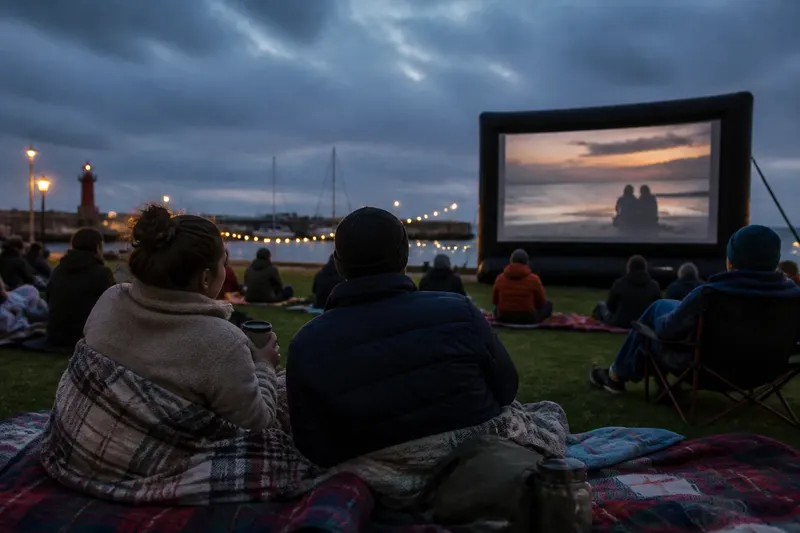
The common mistake when choosing an open-air screening or indoor cinema is to treat the outdoor option as an indoor screening with a better view. The cost is often a film night spent negotiating wind, chairs and dialogue instead of watching the film. Each setting asks something different of you, so choose around the evening you want, not the photograph on the venue page.
What feels different about an open-air screening?
An outdoor screening makes the surroundings part of the occasion. You may hear gulls, see the last light fade or feel a breeze while the film is on. That can suit a relaxed gathering, a familiar comedy or a film whose atmosphere gains from being watched under the sky. It can also pull attention away from a quiet scene.
Sound is the practical dividing line. Indoor cinemas control their acoustics; open spaces cannot. Wind may carry speech away, while nearby conversation, traffic or surf can compete with the soundtrack. Check whether the organiser supplies headphones, uses speakers, or asks the audience to bring anything. If you are choosing a film where whispered dialogue matters, an outdoor venue with clear audio arrangements deserves more weight than a picturesque location.
Comfort is less predictable outside. A low chair can be awkward on uneven ground, and a blanket that feels ample at home may not help much once the evening cools. Look at the venue’s rules for seating, food and bags, and check whether the surface is grass, sand, paving or a temporary platform. Those details affect what you can bring and how easily you can settle.
What does an indoor cinema make easier?
An indoor cinema offers a controlled place to watch. The screen, sound and seating remain broadly consistent through the evening, and a sudden shower does not become part of the programme. For a film with dense dialogue, strong visual detail or a long running time, that consistency can make the viewing itself the main event.
It is also simpler for a mixed group. Someone who dislikes sitting on the ground, needs a quieter environment or would rather not manage extra layers may find the indoor option more comfortable. The trade-off is that the setting has fewer outdoor cues and may feel less like a special coastal outing. That is not a defect; it is simply a different sort of evening.
Consider access before buying tickets. Check the venue’s information for step-free routes, accessible seating, toilets and any restrictions on late entry. If you need a particular arrangement, ask the cinema or screening organiser directly rather than relying on a general venue description.
How should weather shape the decision?
Weather should influence the choice without becoming the whole decision. A clear forecast can still mean a chilly, breezy site; coastal conditions often feel different from those inland. Check the organiser’s cancellation or postponement policy, the time they make a decision, and how ticket holders are notified. Do not assume a screening will move indoors unless the venue says so.
For an outdoor evening, plan clothing for sitting still rather than walking along the promenade. A warm layer, shoes suited to the site and a compact waterproof may be more useful than an elaborate picnic kit. If the forecast looks unsettled and the screening has no clear alternative arrangement, an indoor ticket may spare you a long wait for a decision.
Imagine you have tickets for an outdoor screening at a harbour lawn, the forecast is breezy, and one person in your group gets cold quickly. You check the venue’s seating and cancellation information, pack warm layers and choose a film with a story that does not depend on catching every quiet line. The likely result is a more comfortable, lower-stress outing; if the organiser later postpones it, you already know what happens to the tickets.
Which option suits the film and the group?
Match the format to the kind of attention the film asks for. A visually bold adventure or a well-known favourite may work comfortably in a sociable outdoor setting. A subtitled film, a quiet drama or a story with a complicated plot may be easier to follow in a room with controlled sound and fewer interruptions.
Think about the group as well as the title. Children may enjoy the freedom and novelty of an outdoor event, but the later start, temperature and limited space to move can make it tiring. For a date or a visit with friends, decide whether conversation and atmosphere are part of the plan or whether you want to settle into the film. Neither answer is more cultured than the other.
For a small group with different preferences, agree on the priority before booking: comfort, atmosphere, sound or flexibility. That turns a vague debate into a useful choice. If one person needs a quiet, predictable setting, give that need more weight than a scenic backdrop; if everyone wants an informal evening, outdoor screening may be the better fit.
What should you check before booking?
- Audio: Find out whether the venue uses speakers or headphones, and whether it gives guidance about nearby noise.
- Seating: Check what is provided, what you may bring, and whether the ground is level enough for your preferred seat.
- Weather policy: Confirm how cancellation, postponement or ticket transfers work, and when updates are issued.
- Access and facilities: Look for route information, toilets, accessible seating and the location of the screening area.
- Timing: Check the advertised start, whether there is an introduction, and how much time to allow for arrival and settling in.
- Food and bags: Read the venue rules so you do not arrive with items that cannot be brought inside.
For an indoor cinema, the same checks apply in a simpler form: confirm the screen, access arrangements, seating and arrival guidance. There is little benefit in packing an outdoor kit for a venue that already supplies what you need. What is not worth the effort is trying to predict every gust or bring an answer to every minor inconvenience. A few relevant checks beat a bag full of contingency plans.
Which questions help settle the choice?
Is an open-air screening suitable for a subtitled film?
It can be, but visibility and sound matter more than the setting. Check that the screen is easy to see from the seating area and that the organiser’s audio arrangement suits the venue.
Should I bring a chair to an outdoor screening?
Only if the venue permits it and the ground suits that kind of seat. Some events provide seating or restrict bulky chairs, so check the rules before packing one.
What happens if an outdoor screening is cancelled?
That depends on the organiser’s stated policy, which may offer a postponement, a transfer or another arrangement. Read the ticket information before booking and keep an eye on the channel the organiser uses for updates.
Is an indoor cinema always the safer choice in bad weather?
It avoids exposure to rain and wind during the screening, but the journey to the venue still matters. If conditions make travel difficult, consider the route and local travel advice as well as the room itself.
How do you make the evening feel like your choice?
Use “open-air screening or indoor cinema” as a question about the experience you want. Choose outdoors when the setting, informal company and open air are part of the pleasure, and the venue’s practical arrangements suit your group. Choose indoors when reliable sound, stable comfort and a focused view matter more. The coast does not require every film night to involve a blanket.
Before you book, picture the ordinary middle of the evening: the film is under way, the light has gone, and everyone has been sitting for a while. If that version of the plan still sounds pleasant, you have probably chosen well. If it depends on perfect weather or everyone enjoying the same conditions, reconsider the other screen.